-The Great Wall 2 (2026): A Darker Threat Emerges Beneath the Ancient Fortress
The Great Wall 2 (2026) expands the fantasy-action world established by its predecessor, bringing back Matt Damon and Jing Tian for a new battle that reaches far beyond the towering stone defenses of China’s most famous landmark. This time, the threat does not arrive from outside the Wall. Instead, it rises from beneath it, introducing a dangerous new chapter centered on buried secrets, ancient tunnels, and a forgotten evil capable of threatening an entire empire.
The sequel matters because it shifts the franchise’s focus from external invasion to hidden history, broadening its mythology while retaining the large-scale action and monster-driven spectacle that defined the original concept. By combining epic warfare with mystery and exploration, the film aims to offer audiences a larger and more ambitious adventure.
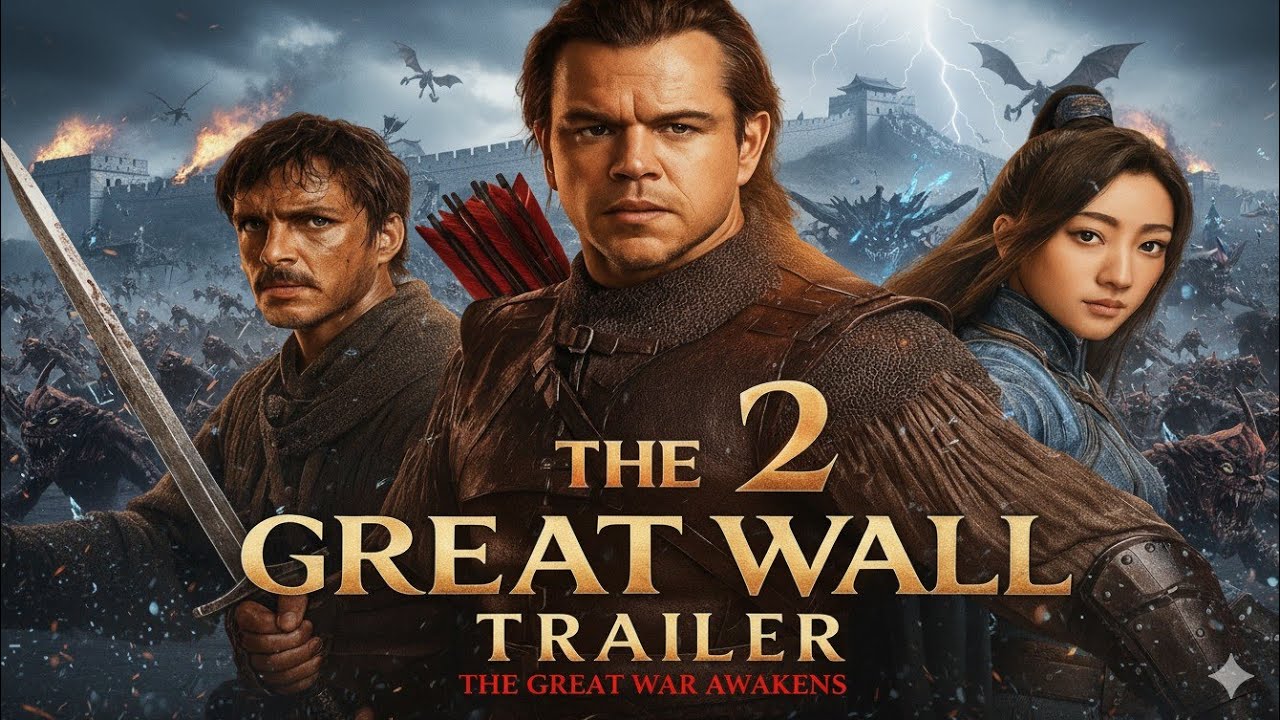
Key Developments: A New Enemy Beneath the Great Wall
According to the film’s premise, years have passed since the last major conflict, and a fragile period of peace has settled across the region. That calm is shattered when ancient tunnels hidden beneath the Great Wall begin to collapse and crack open, revealing a previously unknown danger lurking in the darkness below.
From those depths emerges a terrifying breed of winged creatures, described as more dangerous than any enemy encountered before. Their appearance forces William Garin, portrayed by Matt Damon, and Commander Lin Mae, played by Jing Tian, to reunite against a threat capable of overwhelming traditional defenses.
The sequel emphasizes several major elements:
- Winged monsters emerging from beneath the Wall.
- Massive battles across the Wall’s battlements and fortifications.
- Ancient mysteries connected to the structure’s origins.
- A growing darkness with the potential to destroy an empire.
The result is a story that blends fantasy, action, and mythology while raising the scale of the conflict.
A simple warning echoes throughout the premise: some walls are not built merely for protection.

Background & Context
The original Great Wall concept stood apart from many fantasy blockbusters by using one of the world’s most recognizable landmarks as the centerpiece of a large-scale monster narrative. The Wall itself served as both a military stronghold and a symbol of humanity’s determination to survive against impossible odds.
In The Great Wall 2, that symbolism appears to evolve. Rather than functioning solely as a defensive structure, the Wall becomes part of a deeper mystery. The suggestion that it may have been built to contain something hidden introduces a new layer of intrigue to the story’s mythology.
This narrative shift allows the sequel to move beyond a straightforward siege scenario. Instead of defending against an invading force, the characters must investigate secrets buried beneath centuries of history.
That change gives the story a broader scope.
It transforms the Wall from a battlefield into a puzzle whose answers may determine the fate of an empire.

Analysis: Expanding the Franchise Through Mythology
One of the most notable aspects of The Great Wall 2 is its focus on deeper mythology. Fantasy franchises often face the challenge of escalating stakes without simply repeating previous conflicts. The introduction of ancient tunnels, forgotten histories, and new species of monsters provides a natural way to expand the universe.
The premise also creates opportunities for stronger world-building. If the Wall was constructed as a warning rather than merely a defense, questions immediately emerge about who built it, what they feared, and how much of that history has been lost over time.
Those mysteries could become just as important as the action itself.
“The strongest legends are often the ones hiding a truth no one expected to find.”
From a storytelling perspective, the reunion of William Garin and Commander Lin Mae provides continuity while allowing the narrative to explore new territory. Their previous experience with extraordinary threats positions them as credible leaders in a crisis that few others can comprehend.
The film’s emphasis on extinction-level stakes also reinforces its epic tone. Rather than focusing on personal survival alone, the story centers on the preservation of an entire civilization, a theme commonly associated with large-scale fantasy adventures.
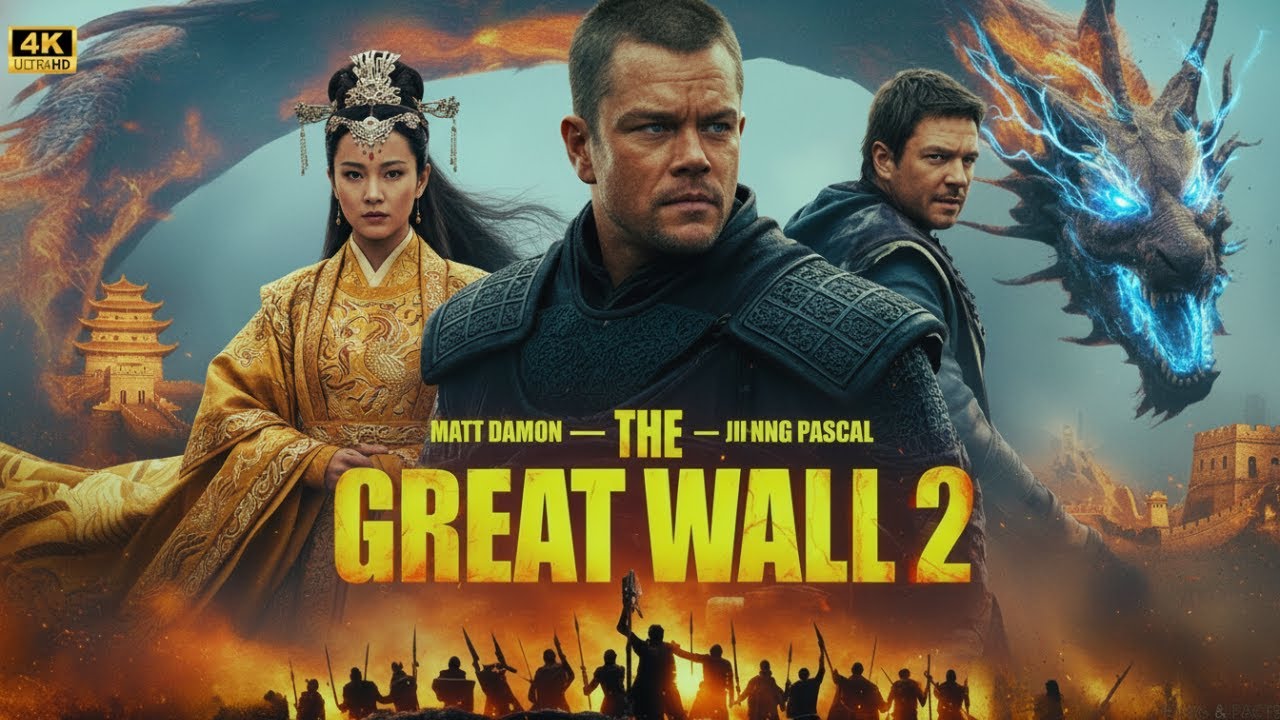
What Works — And What Doesn’t
Based on the provided premise, several elements stand out as potential strengths.
The concept of monsters emerging from beneath the Wall immediately differentiates the sequel from a conventional invasion story. It introduces mystery while maintaining the large-scale action audiences may expect from a fantasy blockbuster.
The return of Matt Damon and Jing Tian offers familiarity and continuity. Their characters already possess a shared history, reducing the need for extensive setup and allowing the story to move quickly into its central conflict.
The focus on ancient secrets and forgotten history could also provide a richer narrative foundation than simple action spectacle alone.
Visually, the combination of towering battlements, underground tunnels, winged creatures, and massive battlefield encounters suggests a broad cinematic canvas capable of delivering memorable set pieces.
At the same time, the film’s success may depend on how effectively it balances mythology with character development. Large-scale fantasy stories can sometimes become overwhelmed by spectacle if emotional stakes receive less attention than visual ones.
The premise promises deeper mythology, but audiences will likely expect those revelations to be supported by meaningful character journeys and clear narrative progression.
If that balance is achieved, the sequel could offer both scale and substance.

Conclusion
The Great Wall 2 (2026) presents an ambitious continuation of the franchise by shifting the focus from invasion to revelation. With Matt Damon and Jing Tian returning to confront a new generation of monsters, the film introduces a darker threat hidden beneath one of history’s most iconic structures.
Its blend of fantasy action, ancient mythology, and large-scale warfare aims to expand the world established in the original story while raising the stakes for its heroes. The promise of buried secrets, winged creatures, and empire-shaking consequences gives the sequel a distinct identity within the fantasy-adventure genre.
Whether audiences are drawn by the action, the mythology, or the mystery behind the Wall itself, the film’s central idea is clear: some warnings survive for centuries for a reason.
Frequently Asked Questions
What is The Great Wall 2 (2026) about?
The film follows William Garin and Commander Lin Mae as they confront a new threat emerging from ancient tunnels beneath the Great Wall. The discovery unleashes dangerous winged monsters and reveals long-buried secrets tied to the Wall’s history.
Who stars in The Great Wall 2?
The provided information lists Matt Damon and Jing Tian as the lead stars, reprising their roles for the sequel.
How does the sequel differ from the previous story?
Unlike a traditional external invasion, the sequel focuses on a threat hidden beneath the Wall, expanding the mythology and introducing ancient mysteries connected to its origins.
What genre is The Great Wall 2?
The film combines fantasy, action, adventure, monster-movie elements, and epic warfare within a large-scale historical-inspired setting.
What themes are explored in the film?
The story explores survival, duty, sacrifice, hidden history, and the consequences of uncovering long-forgotten dangers that were sealed away for generations.