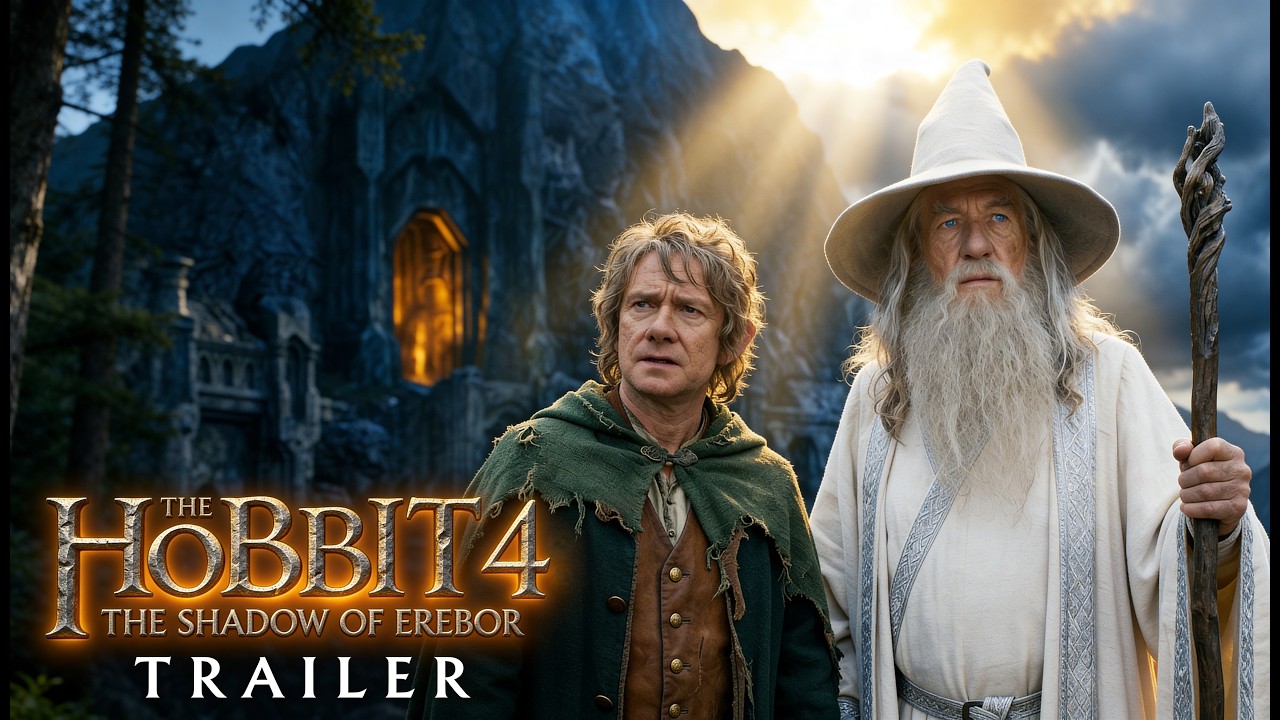
This isn’t just another fantasy sequel—it feels like a return to something legendary. And honestly? I didn’t expect a new Middle-earth story to pull me back in this hard… until the mountains started burning and the sky turned black.

By the time the first major battle arrives, you realize this film is playing for much higher stakes than nostalgia. And then… everything changes.

A Spectacle Worth Watching on the Big Screen
There’s a weight hanging over this story from the very beginning. The world feels older, darker, and far more fragile than before.

Years after peace settled across Middle-earth, whispers of an ancient evil begin spreading once again. Villages burn. Armies move in silence. Dragons return to the skies. What starts as a mysterious disturbance slowly grows into something terrifyingly massive.
The film smartly avoids rushing into chaos too quickly. Instead, it builds tension piece by piece—letting the dread settle in before unleashing full-scale war.
And that patience pays off.
Why This Feels Bigger Than Previous Hobbit Films
One thing immediately stands out: the tone is far more mature and cinematic.
Where earlier adventures often leaned into humor and whimsical detours, this story feels closer to the emotional intensity of a full-scale Middle-earth war epic.
The stakes feel real again.
Martin Freeman slips effortlessly back into the role with a quieter, more weathered performance that works surprisingly well. There’s exhaustion in his eyes this time. Fear too. But also resolve.
Meanwhile, Ian McKellen brings the kind of screen presence that instantly elevates every scene he enters. Some actors perform fantasy dialogue. He makes you believe every word of it.
And Orlando Bloom? He gets several moments longtime fans are going to absolutely lose their minds over.
The Atmosphere Is Incredible
The visual design deserves serious praise.
- Massive burning kingdoms
- Snow-covered mountain fortresses
- Ancient underground halls hiding forgotten power
- Dragons circling through smoke-filled skies
There are sequences here that genuinely feel enormous in scale without becoming visually exhausting.
But here’s what most people will probably miss: the quieter scenes are actually the strongest.
The conversations before battle. The fear spreading among ordinary people. The lingering silence after destruction.
That emotional grounding gives the spectacle real impact.
The Scene That Stole the Show
Without spoiling too much, there’s a sequence involving a collapsing fortress beneath Erebor that might become one of the most talked-about fantasy scenes of the year.
It starts slowly.
A distant sound. Crumbling stone. One glance exchanged between old allies.
Then chaos erupts.
The camera movement, sound design, and sheer scale of destruction create the kind of cinematic moment that reminds you why fantasy films belong on giant screens.
Honestly, I could hear people in the theater holding their breath.
What Works Extremely Well
- The darker tone: The story finally feels genuinely dangerous again.
- Character chemistry: Returning heroes still feel emotionally authentic together.
- Battle sequences: Huge, intense, and surprisingly easy to follow visually.
- Music and atmosphere: The score carries enormous emotional weight.
- World-building: Middle-earth still feels alive in a way few fantasy franchises can replicate.
Where The Film Struggles
It’s not perfect.
The middle section occasionally slows down a little too much, especially during political discussions that don’t always land emotionally.
Some newer characters also don’t receive enough development compared to the returning cast.
And yes—certain moments clearly exist to trigger nostalgia.
But somehow, even when the film leans heavily into fan service… it mostly earns it.
What Viewers Are Saying
- Daniel Brooks: “This felt closer to The Lord of the Rings than the original Hobbit trilogy. Absolutely epic.”
- Emma Collins: “The dragon scenes were insane. I forgot how much I missed Middle-earth.”
- Ryan Mitchell: “Ian McKellen still steals every scene without even trying.”
- Sophia Turner: “That fortress battle sequence? Pure cinema.”
- Kevin Morales: “I expected nostalgia bait. I got emotionally invested again.”
- Rachel Bennett: “The atmosphere is darker, heavier, and honestly way more intense than I expected.”
- Marcus Reed: “Saw it for the action. Stayed for the emotional moments.”
- Olivia Hayes: “Middle-earth still feels magical after all these years.”
Final Verdict
What surprised me most wasn’t the scale.
It was the feeling.
This film understands why people fell in love with Middle-earth in the first place—not just because of battles or dragons, but because these stories make heroism feel emotional and human.
There’s a lingering sadness throughout the film. A sense that legends are fading, peace never lasts, and old wounds never truly disappear.
And somehow, that makes the journey even more powerful.
If you’ve been waiting for a fantasy epic that actually feels grand again… this might be the one.
Not flawless. But unforgettable.
Frequently Asked Questions
Is this movie worth watching in theaters?
Absolutely. The large-scale battles, visual effects, and sound design are built for the big screen experience.
Do you need to watch the previous Hobbit films first?
It definitely helps, especially for understanding returning characters and emotional callbacks, but newer viewers can still follow the main story.
How dark is the tone compared to earlier Hobbit movies?
Much darker and more intense. The atmosphere feels closer to a war epic than a light fantasy adventure.
Are the action scenes actually good?
Yes—and surprisingly emotional too. The film balances large-scale spectacle with character-driven tension very effectively.
Does the movie feel like a true return to Middle-earth?
For longtime fans, absolutely. It captures the emotional scale, danger, and magic that made the franchise iconic in the first place.