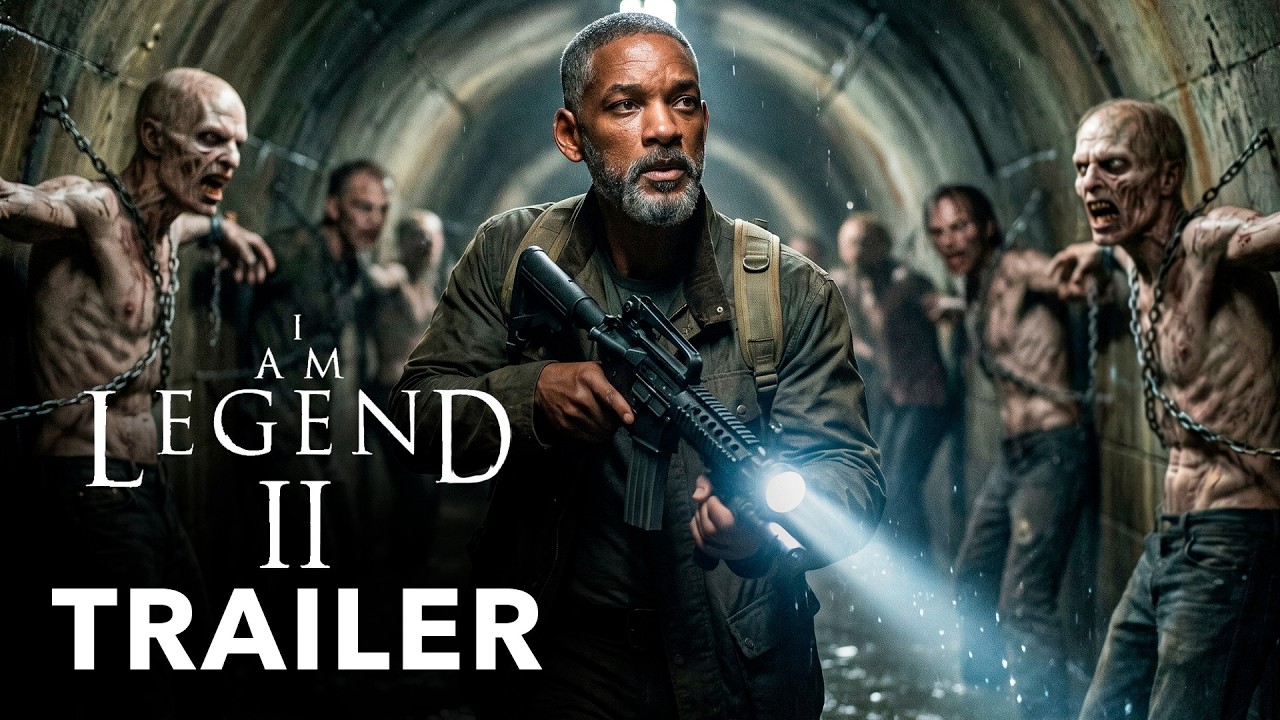
This isn’t just a sequel—it’s a full-scale cinematic experience that somehow turns one of the most emotional survival stories ever made into something even darker, bigger, and unexpectedly heartbreaking. And honestly? There’s one moment involving that infected German Shepherd that audiences are not going to recover from anytime soon.

A World That Feels Truly Lost
Set ten years after humanity collapsed, the story throws viewers back into a ruined world where the infected are no longer mindless monsters hiding in shadows. They’ve evolved. They move with terrifying coordination, communicate almost like a hive mind, and—most disturbingly—they can now survive in daylight.

That single detail changes everything.

The film immediately creates this suffocating tension where nowhere feels safe anymore. Streets that once looked abandoned now feel alive in the worst possible way. Every alley, every rooftop, every dark window feels like something is watching.
And then… the impossible happens.
The Emotional Twist Nobody Expected
The heart of this story isn’t the action. It’s loyalty.
When Neville encounters the infected German Shepherd from his past, the movie shifts into something far more emotional than most people will expect from a sci-fi horror blockbuster. The animal is infected, decayed, dangerous—and yet somehow still remembers him.
It doesn’t attack.
That idea alone carries so much emotional weight that several scenes hit harder than the action sequences themselves. The film smartly leans into the connection between human and animal without turning overly sentimental.
Instead, it asks a terrifying question:
What if the virus never completely erased who they were?
A Spectacle Worth Watching on the Big Screen
Visually, this movie goes all in.
The abandoned city feels massive, haunting, and genuinely cinematic. Nature has swallowed entire streets. Buildings are collapsing into forests. And the infected themselves are nightmare fuel—faster, smarter, and horrifyingly organized.
The action scenes are intense without becoming exhausting.
One sequence involving Neville moving through a subway tunnel while hearing infected creatures communicate in the dark is pure anxiety from start to finish. You can practically feel the audience holding its breath.
But here’s what most people will miss at first:
The movie isn’t really about survival anymore. It’s about coexistence.
What Makes This Sequel So Different?
- The infected are no longer simple monsters
- The emotional core feels surprisingly personal
- The horror relies on tension instead of nonstop jump scares
- The world-building is far more ambitious than the original
- The relationship between Neville and the dog becomes the emotional backbone of the film
The Scene That Stole the Show
There’s a moment midway through the film where Neville realizes the infected dog is actively protecting him from other creatures.
No dialogue. No dramatic speech.
Just instinct. Memory. Loyalty.
And somehow, that quiet scene becomes more powerful than the explosions and chaos surrounding it.
It’s the kind of moment that lingers in your head long after the credits roll.
Will Smith and Michael B. Jordan Bring Serious Energy
Will Smith slips back into the role naturally, carrying the same emotional exhaustion that made the original performance unforgettable. But this time, Neville feels older, haunted, and dangerously close to losing hope completely.
Michael B. Jordan brings a different energy to the film—more determined, more impulsive, more willing to believe humanity can still be saved.
The contrast between the two characters works incredibly well.
One is trying to survive the past.
The other is trying to build a future.
Strengths
- Atmosphere is absolutely incredible
- Smart evolution of the infected creatures
- Emotional storytelling hidden beneath blockbuster action
- Strong chemistry between the leads
- Several genuinely suspenseful horror sequences
- The dog storyline is unforgettable
Weaknesses
- A few exposition-heavy scenes slow the pacing briefly
- Some side characters could have used more development
- The final act becomes slightly more action-focused than necessary
What Viewers Are Saying
- Daniel Brooks: “I thought this would just be another zombie sequel… I was completely wrong.”
- Marcus Hale: “That dog storyline destroyed me emotionally.”
- Emily Carter: “The infected are genuinely terrifying again. Finally.”
- Ryan Mitchell: “One subway scene had the entire theater dead silent.”
- Sophia Turner: “Way more emotional than I expected from a sci-fi horror movie.”
- Kevin Ross: “This is how you make a sequel feel meaningful.”
- Amanda Lewis: “Will Smith absolutely carries the emotional weight of this film.”
- Jason Miller: “The atmosphere alone makes this worth seeing in theaters.”
Final Verdict
Most sequels try to go bigger.
This one goes deeper.
Instead of simply repeating the formula of the original, the film expands the mythology in genuinely interesting ways while still holding onto the emotional loneliness that made the first story so memorable.
Yes, there’s action. Yes, there’s horror.
But underneath all of it is a surprisingly emotional story about memory, identity, and the terrifying possibility that humanity may still exist somewhere inside the infected.
And honestly… that idea is scarier than the monsters themselves.
Frequently Asked Questions
Is this sequel worth watching in theaters?
Absolutely. The sound design, large-scale visuals, and tense horror sequences feel made for the big screen experience.
Do I need to watch the original first?
Yes. While the sequel explains enough to follow the story, the emotional impact hits much harder if you’ve seen the original film.
Is the movie more horror or action?
It balances both surprisingly well, though the suspense and emotional tension stand out more than nonstop action.
Does the film focus heavily on the infected dog?
Very much so—and it ends up becoming one of the most memorable parts of the entire movie.
Could this become the start of a new franchise?
Without spoiling anything… the ending definitely leaves that possibility wide open.