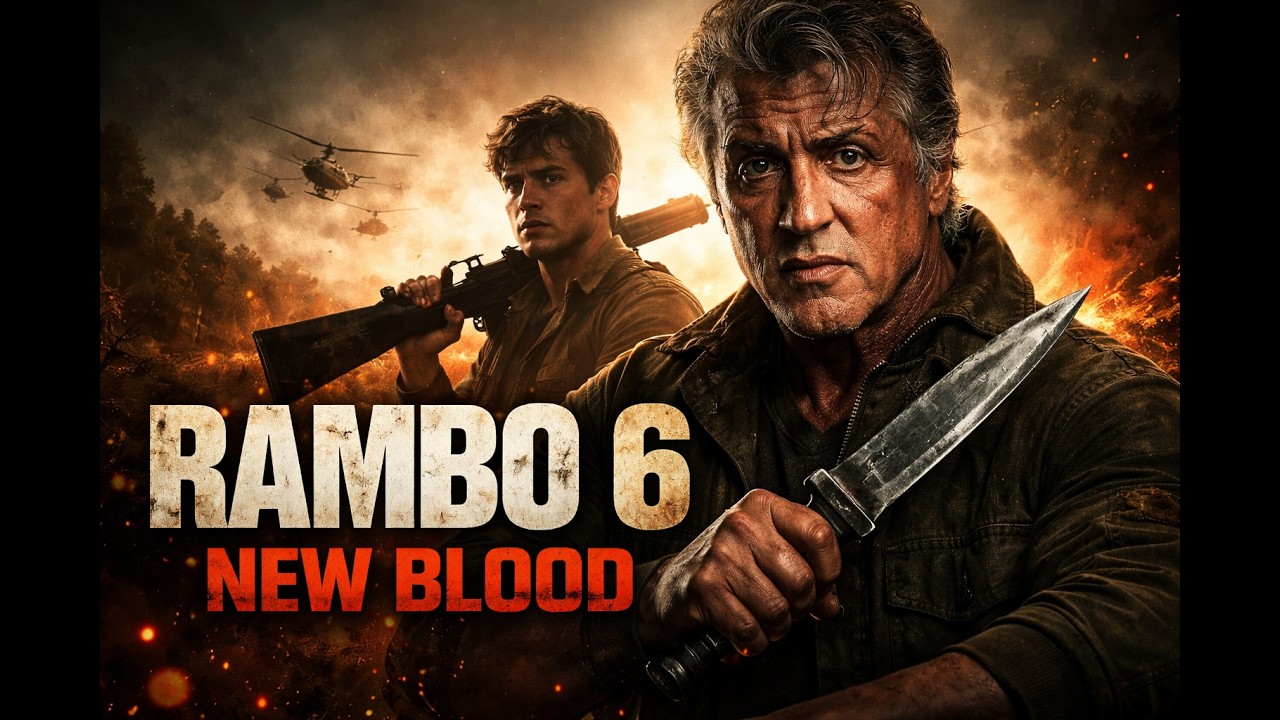
This isn’t just another action movie—it’s a full-scale cinematic experience wrapped in pain, rage, and something surprisingly human. I expected explosions and brutal combat… but I didn’t expect this story to hit like an emotional landmine.

And then… everything changes.

A Spectacle Worth Watching on the Big Screen
What makes this chapter feel different isn’t just the scale of the action. It’s the silence between the violence. The pauses. The haunted expressions. The feeling that John Rambo is carrying an entire graveyard inside his mind.

Sylvester Stallone doesn’t play the character like an unstoppable machine anymore. He plays him like a broken man desperately trying not to become one again.
That subtle shift changes everything.
The story follows Rambo attempting to disappear from the world after decades of bloodshed. No more wars. No more missions. Just isolation and peace. But peace never really comes for men like him.
When a terrifying new global threat emerges, he’s dragged back into violence—and this time, the battle feels deeply personal.
But here’s what most people missed: the real enemy isn’t standing across the battlefield.
It’s already inside him.
The Scene That Stole the Show
There’s one sequence midway through the film that completely changes the tone of the story. No spoilers—but it involves a quiet room, flickering lights, and memories Rambo can no longer suppress.
No gunfire. No explosions.
Just psychological warfare.
And honestly? It’s one of the most intense moments the franchise has ever delivered.
The film smartly blends brutal combat with psychological drama, creating a tension that never really lets go. Even during slower scenes, you feel like something terrible is waiting around the corner.
That constant unease makes the action hit even harder.
Why This Film Feels More Personal Than Previous Chapters
Most action franchises get louder as they age.
This one gets darker.
Instead of trying to outdo previous films with nonstop chaos, the movie focuses on trauma, aging, regret, and identity. What happens when a man spends his entire life surviving war… only to realize he no longer knows how to live without it?
That question hangs over nearly every scene.
And Stallone absolutely commits to it.
What Works Extremely Well
- Emotionally grounded storytelling that gives real depth to the action
- Brutal combat scenes that feel raw instead of over-choreographed
- Outstanding performance from Sylvester Stallone
- Psychological tension that keeps the pacing unpredictable
- Cinematic visuals that make every battlefield feel hauntingly real
- A darker, more mature tone that elevates the franchise
Where It May Divide Audiences
- The slower emotional scenes may surprise viewers expecting nonstop action
- The psychological elements are heavier than previous installments
- Some flashback sequences intentionally feel uncomfortable and disorienting
Still… those risks are exactly what make the movie memorable.
Why The Action Feels Different This Time
Every fight scene carries emotional weight.
That’s the difference.
Rambo isn’t fighting because he wants revenge or glory anymore. Half the time, it feels like he’s fighting himself. Every punch, every bullet, every scream feels tied to decades of buried trauma.
There’s one late-film battle sequence in particular that feels less like an action set piece and more like a psychological breakdown unfolding in real time.
It’s chaotic. Brutal. Exhausting.
In the best possible way.
What Viewers Are Saying
- Daniel Brooks: “I came for the action and ended up emotionally wrecked.”
- Marcus Hale: “Possibly the darkest Rambo movie ever made… and maybe the best.”
- Kevin Turner: “That middle sequence gave me chills. Stallone still owns this role.”
- Ryan Cooper: “Way more emotional than I expected. Some scenes genuinely hurt to watch.”
- Ethan Wells: “The action is brutal, but the psychological side is what stayed with me.”
- Jacob Miller: “This didn’t feel like nostalgia bait. It actually had something to say.”
- Chris Donovan: “One of the few legacy sequels that truly respects its character.”
- Oliver Grant: “I thought the franchise was done. Turns out they saved the best for last.”
Final Verdict
This film isn’t interested in making John Rambo look invincible.
It wants to show what’s left of a man after decades of violence.
And strangely enough, that vulnerability makes him more powerful than ever.
Yes, the action is intense. Yes, the battles are massive. But the reason this movie works so well is because underneath all the destruction is a deeply human story about guilt, survival, and redemption.
It’s brutal. Emotional. Sometimes difficult to watch.
But impossible to ignore.
And if this truly is the final chapter? It’s one hell of a goodbye.
Frequently Asked Questions
Is RAMBO 6 (2026) worth watching in theaters?
Absolutely. The sound design, large-scale action, and emotional intensity feel much more powerful on the big screen.
Do I need to watch previous Rambo movies first?
It helps, especially to understand the emotional weight behind the character, but new viewers can still follow the story.
Is this movie more psychological than previous Rambo films?
Yes. The psychological drama is a major focus and gives the film a darker, more mature tone.
Does Sylvester Stallone still deliver as Rambo?
Without question. This may actually be one of his strongest performances in the entire franchise.
Is the movie mostly action or emotional drama?
It balances both surprisingly well. The action is brutal, but the emotional storytelling is what truly drives the film.